Archives
- 2026-10
- 2026-09
- 2026-08
- 2026-07
- 2026-06
- 2026-05
- 2026-04
- 2026-03
- 2026-02
- 2026-01
- 2025-12
- 2025-11
- 2025-10
- 2025-09
- 2025-03
- 2025-02
- 2025-01
- 2024-12
- 2024-11
- 2024-10
- 2024-09
- 2024-08
- 2024-07
- 2024-06
- 2024-05
- 2024-04
- 2024-03
- 2024-02
- 2024-01
- 2023-12
- 2023-11
- 2023-10
- 2023-09
- 2023-08
- 2023-07
- 2023-06
- 2023-05
- 2023-04
- 2023-03
- 2023-02
- 2023-01
- 2022-12
- 2022-11
- 2022-10
- 2022-09
- 2022-08
- 2022-07
- 2022-06
- 2022-05
- 2022-04
- 2022-03
- 2022-02
- 2022-01
-
br Increased blood ATX and LPA
2023-12-29
Increased blood ATX and LPA in liver fibrosis Although previous in vitro findings have suggested a link between LPA and liver fibrosis in vivo, whether LPA plays a primary role in the pathogenesis of liver fibrosis has remained uncertain. No phenotypic changes in livers of LPA receptor-deficient
-
br Introduction In addition to ATP
2023-12-28
Introduction In addition to ATP production, an important role of mitochondria in the pancreatic beta cell is anaplerosis, which is the net synthesis of citric DBeQ cycle intermediates that are exported to the cytosol where they are converted to numerous other metabolites that stimulate and/or su
-
The interaction of ATR ATRIP with RPA coated ssDNA is
2023-12-28
The interaction of ATR-ATRIP with RPA-coated ssDNA is sufficient for ATR-ATRIP recruitment to DNA lesions, but it is not sufficient to fully activate ATR. In response to DNA damage, the heterotrimeric ring-shaped complex 9-1-1 (RAD9-RAD1-HUS1 in humans; Ddc1-Rad17-Mec3 in S. cerevisiae) is loaded at
-
br Material and methods br Results br Discussion Asparagine
2023-12-28
Material and methods Results Discussion Asparagine, arginine, leucine, methionine, and glutamine are the essential LCL161 for cancer cells and intensively investigated for the development of selective targeted therapeutics. Among them, asparagine depleting bacterial enzyme asparaginase is r
-
TLRs play a key role in pathogen recognition
2023-12-28

TLRs play a key role in pathogen recognition and early response. In our study, we showed an increase of TLR2 mRNA and protein expression after BMECs were stimulated by S. aureus, as seen for BMECs in a previous study [25]. Although most studies describe TLR4 as a primary receptor for Gram-negative b
-
In Pham et al employed the microsphere based technology to
2023-12-28
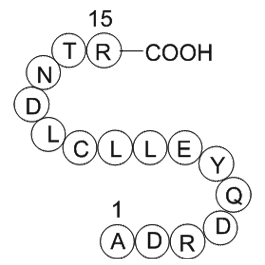
In 2014, Pham et al. [22] employed the microsphere-based technology to create a Luminex probe-based assay for the rapid identification of single nucleotide polymorphisms that are known to confer resistance to one or more echinocandins in C. glabrata. The targets for the FKS probes were generated usi
-
br Role of AR in
2023-12-28
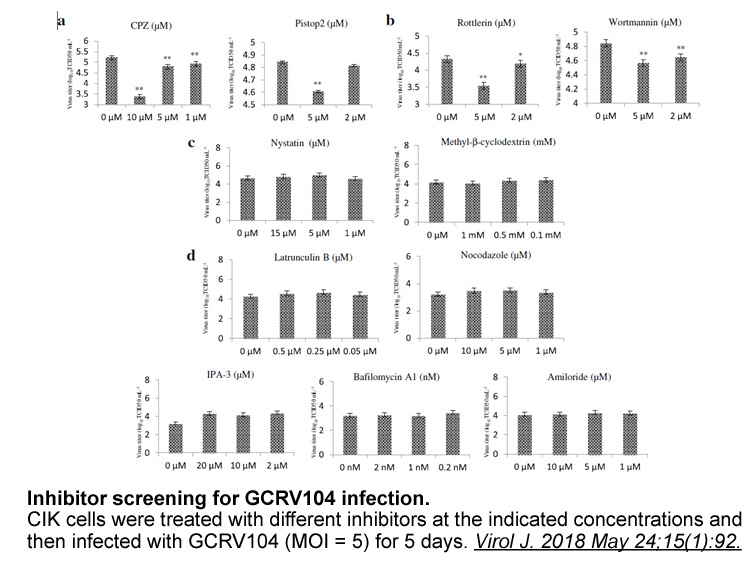
Role of AR in models of neointima formation Investigations into the pathogenesis of lesion formation have often used acute models of mechanical damage to assess the mechanisms regulating the fibro-proliferative response to arterial injury. Models of acute injury used for this purpose include: lig
-
Detailed analysis of the dose dependence of
2023-12-28

Detailed analysis of the dose dependence of Aβ effects revealed that at low amounts, Aβ can also act as a positive regulator of presynaptic activity, enhancing the neurotransmitter release probability and increasing the neuronal excitability [2]. The facilitator effects of low Aβ dose on excitatory
-
AMPK is a central regulator of cell
2023-12-28
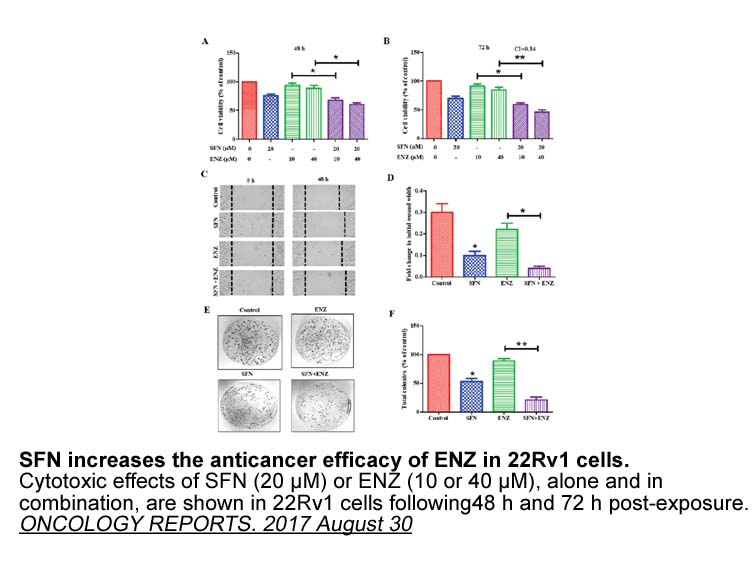
AMPK is a central regulator of cell growth, migration, metabolism, autophagy, and cell polarity [20], [21], [22], [23]. It is highly conserved in eukaryotes and functions as the primary sensor of intracellular adenosine nucleotides [24]. When intracellular ATP levels decrease, AMPK is activated to g
-
With regard to the correlation between
2023-12-28

With regard to the correlation between -rearrangements and thromboembolic events, Zer et al. reported a VTE rate of 36% in a cohort of 98 patients with ALK-positive NSCLC. Of note, VTE was also associated with shorter overall survival (HR: 5.71, =0.01) . Only few others have investigated NSCLC drive
-
br Materials and methods br Results br Discussion
2023-12-28

Materials and methods Results Discussion Several major signaling and developmental pathways (e.g. EGFR, ALK, KRAS, TGFβ, Notch and Wnt/β-catenin) have been shown to be involved in lung carcinogenesis and they are being exploited as targets of the non-small cell lung cancer therapy (for revi
-
br Theoretical mechanism of ABCA activity in LE LY
2023-12-28
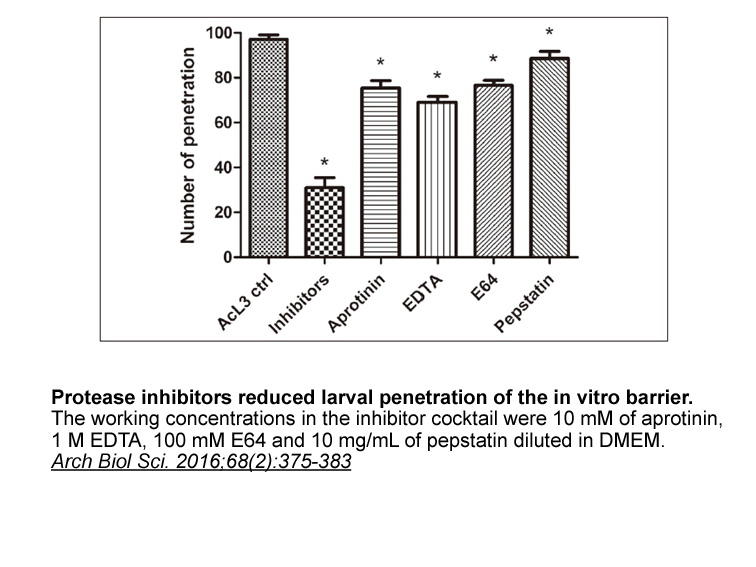
Theoretical mechanism of ABCA2 activity in LE/LY in modulation of cholesterol trafficking It is important to confirm that ABCA2 is a lipid transporter and identify the substrates that are mechanistic in its cholesterol sequestering activity. We hypothesize that ABCA2 modulates cholesterol sequest
-
amoxicillin price One study has demonstrated that PUFA
2023-12-28

One study has demonstrated that ω-3 PUFA reduced both cholesterol and caveolin-1 (a marker of raft), thereby displacing raft-associated signaling molecules from lipid raft [36]. Additionally, DHA treatment decreased the amount of lipid raft in the cell surface and displaced several lipid raft-associ
-
Mechlorethamine HCl mg In summary this study reveals that
2023-12-28

In summary, this study reveals that the stability of rapsyn is critically dependent on HSP90β, highlighting a novel function of HSP90β in NMJ formation and maintenance. It also identifies a mechanism in agrin signaling for AChR clustering, i.e., by upregulating the interaction between HSP90β and rap
-
The consensus amino acid recognition sequence for p
2023-12-27

The consensus amino Ro 3306 recognition sequence for p38α substrates is (Ser/Thr)Pro (Cuadrado and Nebreda, 2010), typically assisted by upstream docking motifs (Remenyi et al, 2005, Sharrocks et al, 2000). P450c17 has 32 Ser and 25 Thr residues, of which only Thr 341 and Ser 427 are immediately fol
8583 records 250/573 page Previous Next First page 上5页 246247248249250 下5页 Last page